







A dental crown covers and protects a damaged or weakened tooth, sitting over it much like a hat to restore strength, stability and long-term protection. Dental crowns are commonly recommended when a tooth has fractured, been heavily filled or weakened over time, and patients often want to know how long they’ll last.
Understanding the factors that affect longevity can help you know what to expect and how to care for your crown so that it serves you well for many years. If you are new to this treatment, we recommend starting with our guide on what a dental crown is. To learn more about dental crowns in Sydney or discuss your specific needs, book a consultation with any of our dentist in Sydney in one of our 18 Sydney locations.
Average Lifespan of a Dental Crown
Most dental crowns last between five and fifteen years. However, with excellent care, many will last longer than a decade.
While research studies often report ideal outcomes, real-life longevity depends on several important factors including the crown material, the condition of the tooth, oral habits and how well the crown is maintained.
Different patients require different materials depending on their mouth, bite and dental needs. In our earlier article on choosing dental crown types and materials, we discussed how dental crowns may be made from materials such as porcelain and metal alloy.
The available space between upper and lower teeth and the condition of the remaining tooth structure also influence the choice of material.
Regular dental check-ups and good oral hygiene significantly increase the lifespan of a crown. Patients who attend routine appointments and care for their teeth well often enjoy crowns that last well beyond ten years.
What Can Affect How Long a Crown Lasts
The lifespan of a dental crown can vary from person to person, and it’s rarely determined by just one factor. Daily oral hygiene plays a central role, particularly consistent brushing and flossing around the crown margins to help prevent decay and gum inflammation. Healthy gums provide the necessary support to keep the crown stable over time.
Habits such as bruxism (teeth grinding) or other parafunctional behaviours can place additional pressure on a crown, potentially shortening its longevity.
The precision of the crown’s fit and placement is equally important, and something your Sydney dentist will assess carefully, as is the condition of the natural tooth beneath it.
A tooth that was heavily restored, cracked or structurally compromised before treatment may influence how long the crown performs at its best. The height and strength of the remaining tooth structure also affect retention, and undetected cracks in the underlying tooth can impact long-term outcomes.
As Dr Sonali from Beverly Hill No Gaps Dental Clinic explains, “A crown is a strong and durable restoration, but its longevity depends on the foundation it’s built on and how well it’s cared for. Good oral hygiene, healthy gums and managing habits like grinding can make a meaningful difference. We take the time to talk through these factors with each patient and provide personalised advice to help keep their crown in excellent condition for as long as possible.”
Tips to Help Your Crown Last Longer
Most crowns last longer when patients follow simple, consistent care habits provided by your dental professional:
- Maintain excellent oral hygiene with regular brushing and flossing.
- Attend routine dental check-ups and professional cleans.
- Maintain a balanced and healthy diet.
- Avoid biting on very hard or sticky foods (like ice or hard lollies).
- If you have bruxism, wear your occlusal splint (night guard) as directed.
- Use interdental brushes if your dentist has advised them.
With proper care, many crowns continue to function beautifully for well over a decade. Remember, take care of your general health, as it also affects your oral health.
Signs a Crown May Need to Be Replaced
Eventually, a crown may need replacement if any of the following occur:
- Decay develops underneath the crown.
- The crown fractures or breaks.
- A root canal is required on the tooth after the crown is placed.
- The crown repeatedly becomes loose or dislodges.
- Improved contact is needed between the teeth for better chewing function.
If you notice discomfort, changes in your bite or any movement in your crown, it is important to have it assessed promptly. Book an appointment with one of our Sydney dentists as soon as possible.
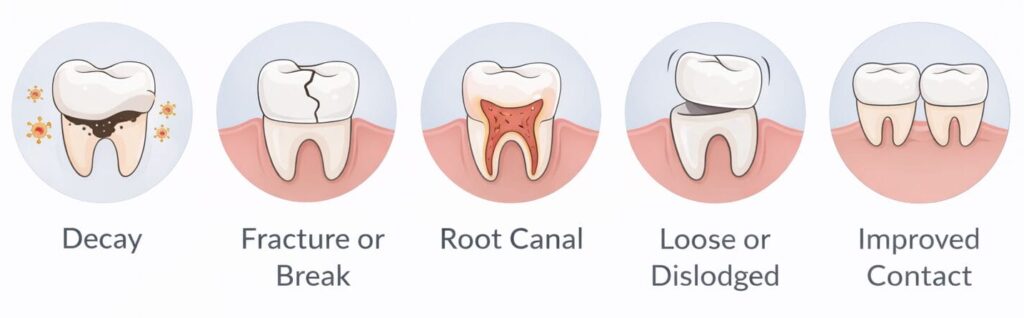
Signs that your crown needs replacing
Dental Crowns: The Complete Series
This article is part 5 of our 6-part series on dental crowns.
- What is a Dental Crown?
- Choosing Dental Crown Types and Materials
- The Dental Crown Procedure
- Dental Crown Cost in Sydney
- How Long Does a Dental Crown Last? (You are here)
- CEREC Crowns: Pros, Cons and What to Expect
Ready to Book Your Dental Crown Options?
Book an appointment at one of our 18 Sydney locations today. We are in convenient locations across the CBD and Inner West, the Hills District, Northern Beaches, and South West Sydney. Call (02) 8007 6727 or book online.
Important Information
All dental procedures carry risks. A clinical assessment is required to determine whether a dental crown is suitable for your individual circumstances. Any surgical or invasive procedure carries risks. Before proceeding, you should seek a second opinion from an appropriately qualified health practitioner.
This article includes clinical insights from Dr Sonali Arora of No Gaps Dental Beverly Hills and Epping clinics.