







A dental crown is a custom-made restoration that sits over a tooth. It helps the tooth function and cope with everyday use. A dentist in Sydney may suggest a crown when a tooth has lost strength due to damage, repeated fillings, or wear. The decision depends on how much healthy tooth structure remains and how the tooth functions as part of your bite.
Fillings repair parts of a tooth. A crown supports most of the tooth above the gumline, helping it handle chewing forces more evenly during activities like eating and speaking.
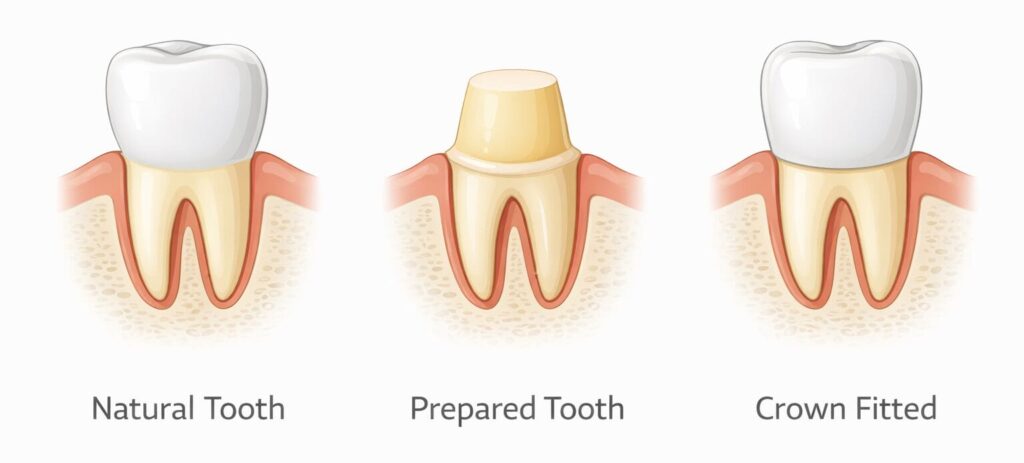
Diagram shows a natural tooth, a prepared tooth, and a crown fitted.
What Does a Dental Crown Actually Do?
Dentists recommend a crown when a tooth needs more support than a filling can provide. By covering the tooth, a crown spreads biting pressure across a wider surface, reducing stress on weaker areas.
“When we recommend a crown, we’re usually thinking about how to protect what’s left of the tooth and help it cope with daily chewing, rather than trying to make it look perfect,” said Dr Minal Ramekar from No Gaps Dental Artarmon clinic.
Back teeth usually take on stronger chewing forces, which is why dentists often consider crowns for molars. Front teeth may also benefit from crowns in certain situations, depending on strength needs and appearance.
When Might a Dentist Recommend a Dental Crown?
A dental crown is not always the first option, so best to speak to your dentist to understand your treatment options. Dentists usually recommend crowns when other treatments may not provide enough support.
Common situations include:
After root canal treatment, particularly for back teeth that may be more prone to fracture:
- A tooth that is cracked, broken, or significantly worn
- A tooth with a large filling and limited remaining structure
- A chipped tooth where strength needs to be restored
- A tooth that has lost its shape over time
Not every damaged tooth needs a crown. Dentists assess remaining tooth structure, bite forces, and overall oral health before recommending treatment.
In everyday practice, dentists also consider how a patient uses their teeth, such as chewing patterns or grinding habits, when deciding whether a crown is appropriate.
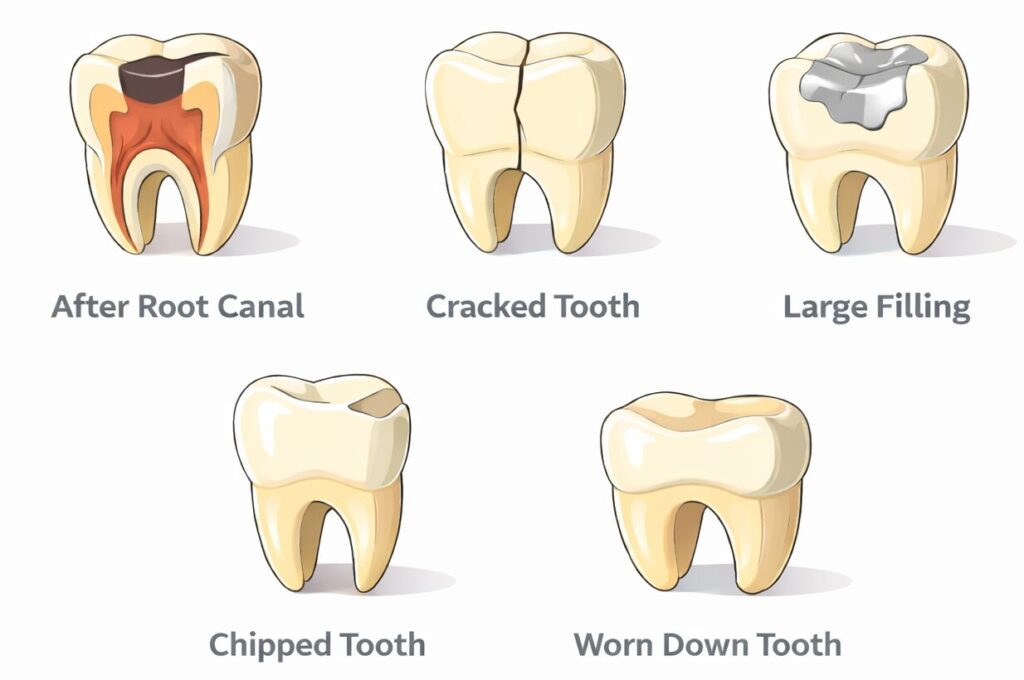
Examples of teeth that may require a dental crown due to damage or wear.
How Does a Dental Crown Work?
A dental crown covers and protects the tooth. It forms a new outer surface that works with your bite and surrounding teeth.
Once fitted, the natural tooth underneath remains in place and continues to support the crown. Ongoing dental care remains important, as a crown cannot remove all risk of future wear or decay.
What Are Dental Crowns Made Of?
The right material depends on the tooth’s position and the forces placed on it. Your dentist will recommend a material based on your clinical needs, not appearance alone.
Ceramic crowns are often used for front teeth because they can closely match natural tooth colour. Zirconia crowns are known for their strength and are commonly considered for back teeth. Porcelain-fused-to-metal crowns combine a metal base with a tooth-coloured outer layer, while metal or alloy crowns may be recommended where strength is a priority.
For a detailed breakdown, see our guide on types of dental crowns.
Your dentist will recommend a crown material based on your specific circumstances, not appearance alone. Speak to your dentist today about your treatment needs.
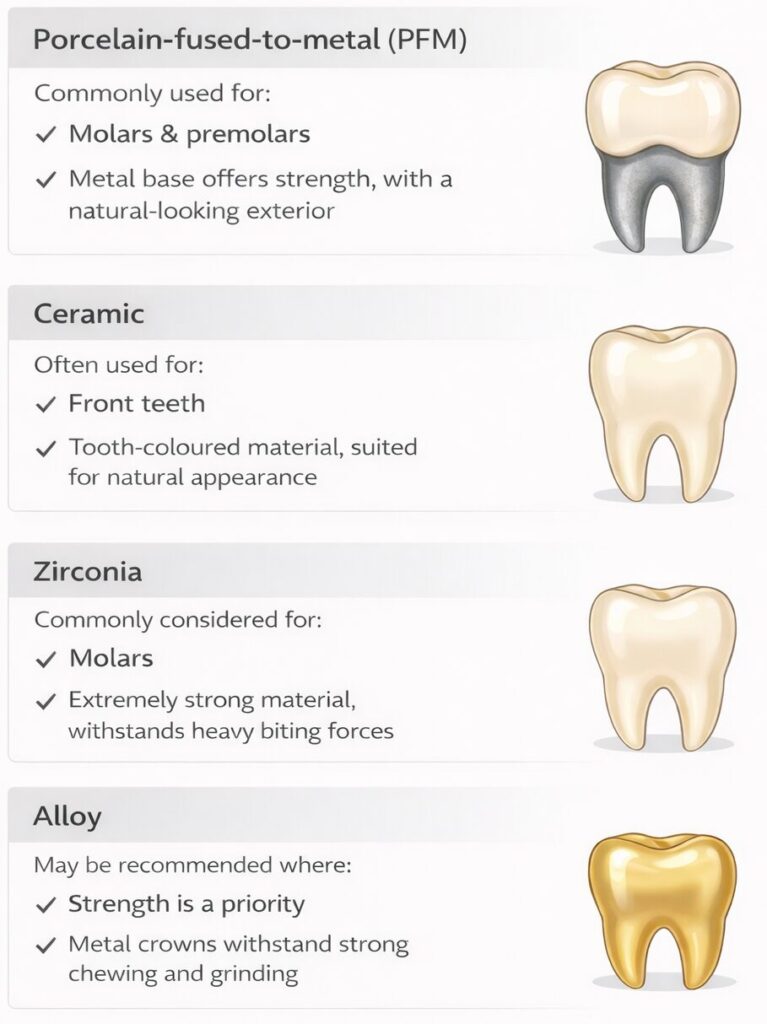
Comparison of the common dental crown materials and their typical uses.
What Does a Crown on a Tooth Look Like?
Modern crowns are designed to blend with natural teeth. Dentists match colour, shape, and size to suit your smile and bite, with the final result varying depending on tooth position, material, and your natural tooth shape.
“Once a crown is fitted and your bite settles, it usually blends in far more naturally than people expect,” said Dr Minal Ramekar from No Gaps Dental Artarmon clinic.
Are Dental Crowns Good for Your Teeth?
When recommended appropriately, dental crowns can help preserve remaining tooth structure.
A crown does not strengthen a tooth from the inside. Instead, it supports the remaining tooth and may help reduce the risk of further damage during normal chewing. A tooth with a crown can still develop decay at the edges, which is why good oral hygiene and regular dental check-ups remain essential.
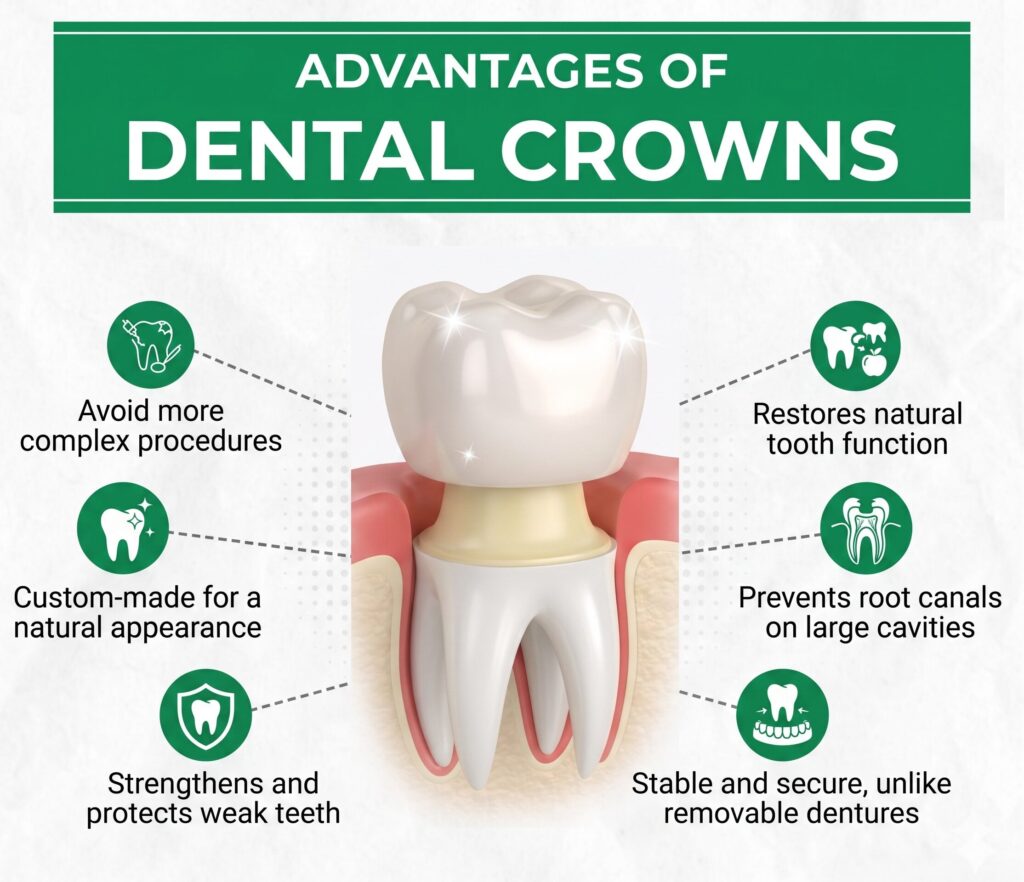
Advantages of a dental crown – always consult a dentist whether a dental crown is suitable for you
How Long Does a Dental Crown Last?
Many crowns last for years with proper care, but lifespan varies. Factors include oral hygiene, tooth position, grinding or clenching habits, and the material used. Many crowns last for years with proper care, but they may eventually need review or replacement.
For more detail, see our guide on how long dental crowns last.
What About Dental Crown Costs?
Cost varies depending on the material, treatment complexity, additional procedures required, and your private health insurance cover.
For a Sydney-specific breakdown, see our guide to dental crown cost in Sydney.
Discuss the dental needs with your dentist. After assessing your needs, your dentist can provide a written treatment plan and cost estimate before you proceed. Rebates and no-gap eligibility depend on your health fund and level of cover.
Caring for a Dental Crown
Caring for a crown is similar to caring for natural teeth. This includes brushing twice daily with fluoride toothpaste, cleaning between teeth daily, avoiding very hard objects such as ice, and attending regular dental check-ups.
After getting a dental crown, you might experience:
- Sensitivity: Your tooth may be sensitive to hot or cold temperatures, sweet or sour tastes, or pressure.
- Discomfort: Mild pain or discomfort when biting or chewing is normal.
- Gough feeling: Your tongue might feel the crown is uneven or rough.
- Numbness: Temporary numbness around the tooth and gums due to anaesthetic.
These effects usually subside within a few days. If you experience severe pain, swelling, or bleeding, contact your dentist ASAP.
To minimize discomfort:
- Avoid chewing on the crowned tooth until numbness wears off
- Eat soft foods
- Use desensitizing toothpaste if needed
- Follow your dentist’s aftercare instructions
If you grind or clench your teeth, your dentist may discuss ways to help protect your crown.
Dental Crowns: The Complete Series
This article is part 1 of our 6-part series on dental crowns.
- What is a Dental Crown?
- Choosing Dental Crown Types and Materials
- The Dental Crown Procedure
- Dental Crown Cost in Sydney
- How Long Does a Dental Crown Last?
- CEREC Crowns: Pros, Cons and What to Expect
Thinking About a Dental Crown?
If you have been advised that you may need a dental crown, the next step is a personalised dental assessment. A dentist can explain your options and confirm whether a crown is suitable for your tooth.
If you’re considering dental crowns in Sydney, No Gaps Dental operates across 18 locations across Sydney to make it easy to get assessed close to home. Book an appointment today to discuss whether a dental crown is right for you.
Important Information
All dental procedures carry risks. A clinical assessment is required to determine suitability for your individual circumstances.
This article includes clinical insights from Dr Minal Ramekar of No Gaps Dental Artarmon.
Frequently Asked Questions about Dental Crowns
Does getting a dental crown hurt?
The procedure is typically performed under local anaesthetic, similar to a standard filling, to ensure the area is numb. While you should not feel pain during the preparation, it is common to experience some mild sensitivity or gum tenderness for a few days after the appointment as the area heals. Ask your dentist about pain management options that may be suitable for you.
How do I know if I need a crown or just a filling?
A filling is generally used to repair minor decay where the tooth structure remains mostly intact. A crown is recommended when a tooth is too weak to support a filling or has a high risk of fracturing. A clinical examination and often an X-ray are required for a dentist to determine which treatment is most appropriate for your tooth.
How long does a dental crown last?
Typically between 5 and 15 years, depending on the material, your oral hygiene habits (brushing and flossing), and whether you grind your teeth (bruxism). Regular check-ups allow your dentist to monitor the crown’s integrity over time.
Can a crowned tooth still get a cavity?
Yes. While the crown itself is made of synthetic material and cannot decay, the natural tooth underneath and the margin where the crown meets the gumline are still susceptible to plaque buildup and decay. Maintaining a good oral health routine is essential to protect the underlying tooth.
Is a dental crown a “permanent” solution?
In dental terms, a crown is a long-term restoration, but it is not considered permanent in the sense that it will never need replacing. Factors like natural wear and tear, changes in your gumline, or trauma may require the crown to be replaced in the future to maintain the health of the tooth.
Does Medicare or health insurance cover the cost of a crown?
Medicare generally does not cover most dental procedures, including crowns. However, most private health insurance providers with “Major Dental” cover will contribute to the cost. We recommend checking with your specific provider, and we can provide the relevant item codes for a quote during your consultation.