





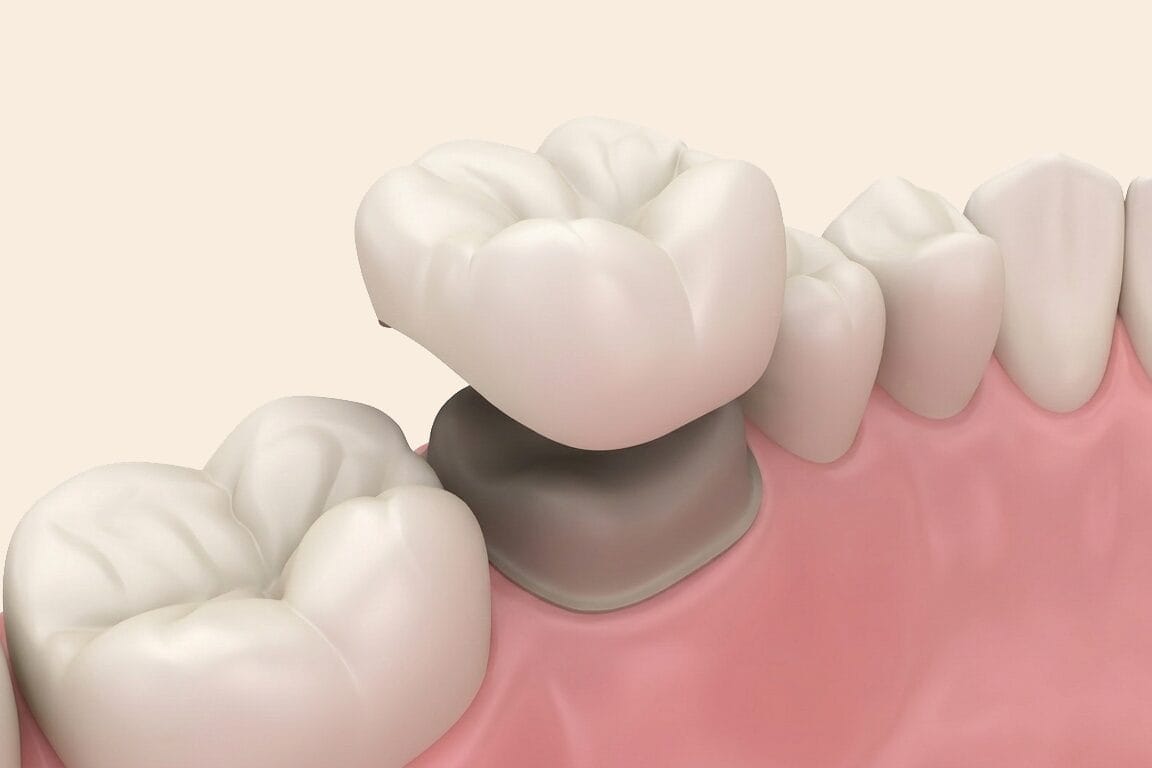
CEREC same-day dental crowns use digital scanning and in-clinic milling to produce a ceramic crown in a single appointment. This means patient can avoid the traditional two-visit process, dental laboratory wait time, and the need to wear a temporary crown. While the technology offers great convenience and efficiency for suitable cases, it is not ideal for every situation. The best results come from careful case selection and choosing the right treatment for each individual patient.
This guide explains how CEREC works, what its pros and cons are, who it may be suitable for, and how it compares with traditional crowns.
This article is part of our dental crown educational series. In earlier articles, we discussed what is a dental crown, how the crown procedure works, typical dental crown cost in Sydney, and how long a dental crown lasts. In this article, we address a common question patient frequently ask: is there a faster option?
If your dentist has already recommended a crown and you would like to understand your options before your next appointment, read on and then reach out to your nearest No Gaps Dental clinic. Our team can confirm whether CEREC is available at that location and answer any questions before you commit to treatment.
Quick Summary on CEREC Dental Crowns
- Same-day treatment: Some crowns can be designed, milled, and fitted in a single visit.
- Digital scanning: A 3D intraoral scan is used instead of traditional impression moulds.
- Material: typically made from high-strength ceramic and colour-matched to blend naturally with your surrounding teeth.
- Well-suited for: many single-tooth restorations where the tooth structure allows clear scanning.
- Not suitable for every case: some teeth still benefit from laboratory-made crowns, depending on position, damage extent and bite forces.
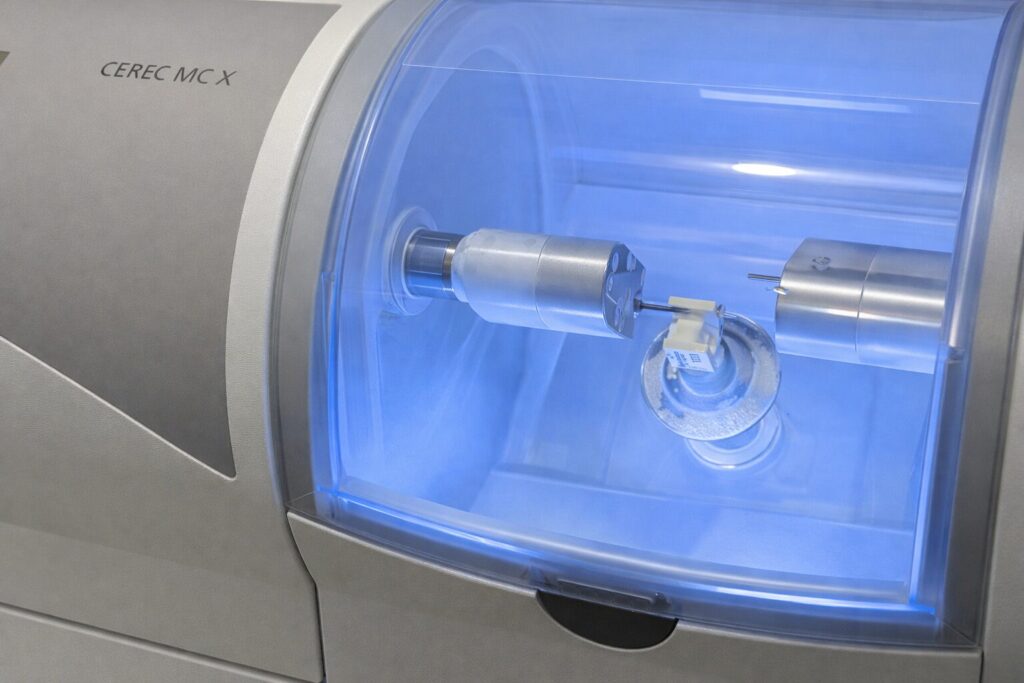
CEREC milling units carve crowns from ceramic blocks directly in the dental clinic
What Is a CEREC Crown?
CEREC stands for Chairside Economical Restoration of Esthetic Ceramics.
It refers to a digital system that allows dentists to design and produce ceramic crowns directly in the clinic, rather than sending impressions to an external dental laboratory. Although CEREC technology has been around since the 1980s, improvements in digital scanning, software design, and ceramic materials have made it far more common in modern Australian dental practices.
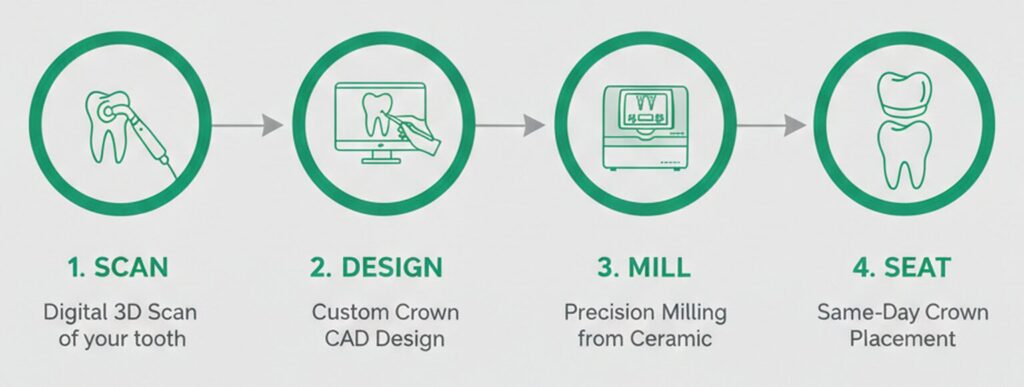
The process typically involves four steps:
- A digital intraoral scan of the prepared tooth
- Computer-aided crown design using 3D software
- In-clinic milling: a machine carves the crown from a ceramic block
- Final fitting, polishing and bonding
“When the clinical situation is suitable, digital crown technology can make the treatment process more efficient. For many patients, the main benefit is being able to complete the crown in a single visit rather than returning for a second appointment,” says Dr Nina Zhang from No Gaps Dental Chatswood.
Who May Be Suitable for a CEREC Crown?
A same-day crown may be considered when:
- You have a cracked, fractured or heavily filled tooth that a dentist has assessed as needing a crown.
- You have recently completed root canal therapy and the tooth requires protection.
- Your tooth has enough remaining structure above the gum line to allow a clear digital scan.
- The tooth is in a position where ceramic material is appropriate for the bite load it will carry.
- You prefer to complete treatment in a single appointment where clinically possible.
During your consultation, your dentist will assess the tooth structure, position, bite forces and overall treatment plan before recommending the most appropriate approach. Book a consultation to find out if CEREC is suitable for you.
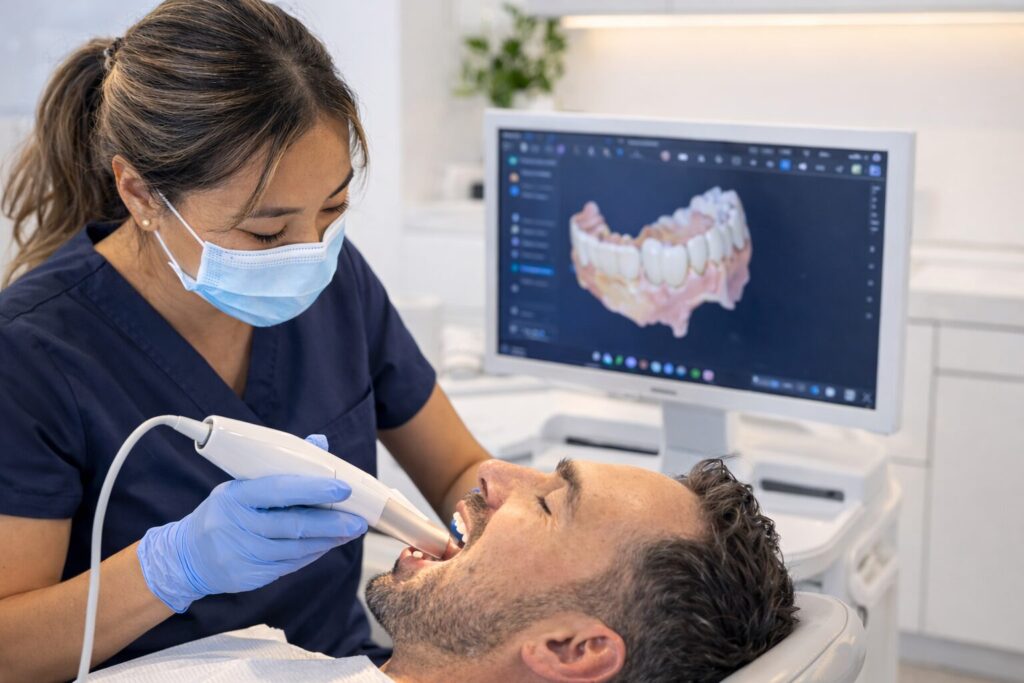
Dentist using digital intraoral scanner to take 3D impressions for a CEREC same-day crown in Sydney
Advantages of CEREC Crowns
Same-Day Treatment
One of the most practical benefits of CEREC crowns is the reduced number of appointments required. Traditional crown treatment usually involves an initial visit to prepare the tooth and take impressions, followed by wearing a temporary crown while the laboratory fabricates the final restoration (typically taking one to two weeks). A second appointment is then needed to fit the permanent crown.
With CEREC technology, suitable crowns can often be designed, milled and fitted in a single visit, which usually takes around one to two hours.
Digital Impressions Instead of Moulds
Traditional crowns typically require physical impression material to be placed in the mouth while it sets, a step that some patients find uncomfortable. CEREC crowns replace this with a digital intraoral scan, producing a precise 3D model of the tooth that the dentist can review and adjust before the crown is produced.
No Temporary Crown Required
Because traditional crowns are manufactured in a laboratory, a temporary crown is usually placed between appointments. Temporary crowns can sometimes feel bulky, become loose, or require extra care when eating. Since CEREC crowns are milled during the same appointment, temporary crowns are generally unnecessary.
Precise Digital Design
CEREC software allows dentists to design the crown using a 3D digital model of the prepared tooth and surrounding bite. This helps ensure the crown fits the prepared tooth accurately, aligns with neighbouring teeth, and maintains proper bite contact before the milling process begins.
Natural-Looking Ceramic Material
CEREC crowns are typically made from tooth-coloured ceramic materials, with shade selection tailored to the surrounding teeth. “When planning a crown, we are looking at both aesthetics and strength. The goal is to restore the tooth in a way that supports long-term function,” says Dr Nina Zhang.
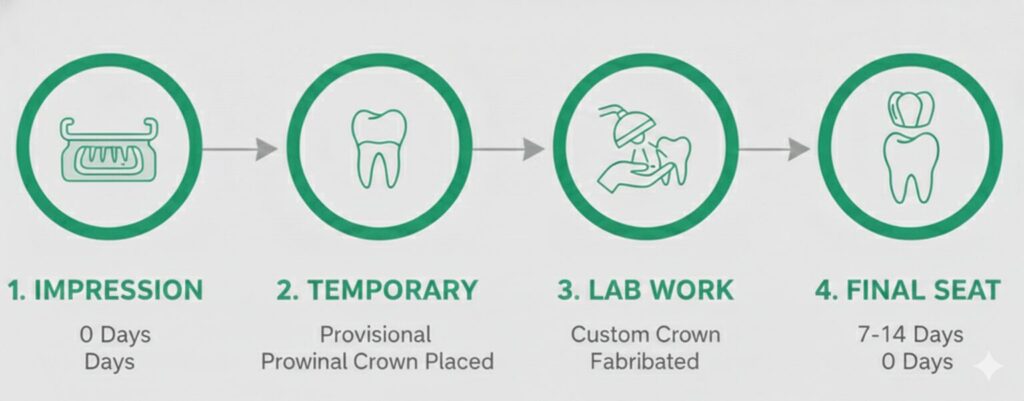
Traditional dental crown process
CEREC dental crown process
Limitations of CEREC Crowns
Not Suitable for Every Tooth
CEREC crowns require the dentist to capture a clear digital scan of the fully prepared tooth. If damage or decay extends below the gum line, it may be difficult for the scanner to capture the full shape of the preparation. In these situations, traditional impressions and laboratory fabrication may provide a more predictable result.
Limited Material Options
CEREC crowns are typically milled from single-block ceramic materials. Traditional crowns can be made from a wider range of materials, including porcelain-fused-to-metal, zirconia, gold alloys and layered ceramics. Each material offers different advantages depending on tooth position and the biting forces it needs to withstand.
High Bite Force Areas
Back molars experience the strongest chewing forces in the mouth. While modern ceramics are durable, dentists sometimes recommend different crown materials for teeth that are exposed to very heavy bite pressure.
“The choice of crown material depends on several factors, including bite forces, tooth position and how much natural tooth structure remains,”says Dr Nina Zhang.
CEREC vs Traditional Crowns at a Glance
Both approaches can provide effective, long-term restoration when planned appropriately for the individual patient.
How Long Can a CEREC Crown Last?
Like all crown restorations, the lifespan of a CEREC crown depends on several individual factors. As detailed in our guide on how long dental crowns last, most crowns last between five and fifteen years, with many lasting well over a decade when patients maintain good oral hygiene, attend regular check-ups and avoid habits that place excessive load on the crown.
Factors that may affect crown longevity include daily brushing and flossing habits, the presence of bruxism (teeth grinding), the bite forces on the restored tooth, and the condition of the underlying tooth structure at the time of placement.
Your dentist will discuss care instructions at your appointment and can also advise whether wearing a night guard could help protect the restoration if grinding is a concern.
Health Fund and CEREC Crowns
Health fund rebates for crown treatment depend on your fund, your level of cover and the specific item numbers used for the procedure. As with all dental procedures, out-of-pocket costs can vary between patients. For a clear picture of what your fund may contribute, we recommend checking with your health fund directly or bringing your membership card to your appointment, so our team can confirm your entitlements before treatment begins.
For a general overview of crown pricing factors, see our guide on dental crown costs in Sydney.
Is CEREC Available at My No Gaps Dental Clinic?
CEREC technology is available at selected No Gaps Dental Clinics across Sydney. If same-day crown treatment is something you would like to explore, please book a consultation online.
Frequently Asked Questions
Are CEREC crowns as strong as traditional crowns?
Modern ceramic materials used in CEREC crowns are strong and durable for many single-tooth restorations. However, for teeth that experience very heavy bite forces, or in situations where a broader range of materials is preferred, your dentist may recommend a laboratory-made crown. The right choice depends on the individual clinical situation and will be determined during your dentist’s assessment.
How long does a CEREC crown appointment take?
The single-appointment process typically takes around one to two hours, though this may vary depending on the complexity of the preparation and any adjustments required during the fitting stage.
Do CEREC crowns look natural?
CEREC crowns are made from tooth-coloured ceramic and are shade-matched to the surrounding teeth. Most patients find that the final result blends well with their natural smile. As with any crowns, the final aesthetics also depend on the tooth position and the ceramic shade selected.
Will my health fund cover a CEREC crown?
Health fund rebates depend on your specific fund, cover level and the item numbers used for the procedure. Many funds treat CEREC crowns the same as traditional crowns, but it is always best to confirm with your fund or our clinic team before treatment.
What if CEREC is not suitable for my tooth?
If a same-day approach is not appropriate for your situation, your dentist will explain the reasons and discuss the traditional two-visit crown process. Both approaches aim for the same outcome: a well-fitting, durable restoration that protects the tooth for the long term.
Book your dental crown consultation at your nearest No Gaps Dental clinic.
Dental Crowns: The Complete Series
This article is part 6 of our 6-part series on dental crowns.
- What is a Dental Crown?
- Choosing Dental Crown Types and Materials
- The Dental Crown Procedure
- Dental Crown Cost in Sydney
- How Long Does a Dental Crown Last?
- CEREC Crowns Pros and Cons (You are here)
Ready to Book Your Dental Crown Options?
Book an appointment at one of our 18 Sydney locations today. We are in convenient locations across the CBD and Inner West, the Hills District, Eastern suburbs, and South West Sydney. Call (02) 8007 6727 or book online.
Important Information
All dental procedures carry risks. A clinical assessment is required to determine whether a dental crown is suitable for your individual circumstances. Any surgical or invasive procedure carries risks. Before proceeding, you should seek a second opinion from an appropriately qualified health practitioner.
This article includes clinical insights from Dr Nina Zhang of No Gaps Dental Chatswood clinics.