


Types, Benefits, Costs, Safety and Regulations
A brighter smile is a common cosmetic dental goal. Teeth whitening can lighten natural teeth and reduce many types of surface and internal staining. However, treatments vary in strength, cost, convenience, and level of professional supervision. Let’s explore the teeth whitening options in Australia.
The main options include professional in-chair whitening, dentist-prescribed take-home whitening, over-the-counter products, whitening toothpaste, strips, and pens. Understanding the benefits and limitations of each option can help you choose a treatment that suits your dental health, budget, and expectations.
Considering teeth whitening? Book a consultation at your nearest No Gaps Dental clinic to find out which option is right for you.
What Is Teeth Whitening?
Teeth whitening is a cosmetic treatment that makes natural teeth appear brighter. Professional products commonly use hydrogen peroxide or carbamide peroxide. These ingredients break down staining compounds within the tooth, helping to improve its overall colour.
Whitening only affects natural tooth structure. It does not change the colour of crowns, veneers, bridges, fillings, or other tooth-coloured restorations. If you have visible restorations, a dental assessment is important before treatment, particularly if you want an even result.¹
Let’s look at tooth whitening options available in Australia.
1. In-Chair Professional Teeth Whitening
In-chair professional teeth whitening is performed in a dental practice under the supervision of a registered dental practitioner. The dentist applies whitening gel to the teeth and protects the gums and surrounding tissues. Some systems use a specialised light, although the additional benefit of light activation varies between products.
Treatment usually takes one appointment, but the duration depends on the system used and your individual needs.
Pros
- Fast results: Many patients see a noticeable improvement after one appointment.
- Professional assessment: The dentist can check for decay, gum disease, cracks and existing sensitivity before treatment.
- Controlled application: The gel is applied carefully to reduce contact with the gums.
- Personalised care: Treatment can be adjusted for your tooth colour, sensitivity and desired outcome.
- Convenient for events: In-chair whitening may suit patients preparing for a wedding, celebration or professional photographs.
Cons
- Higher cost: In-chair treatment generally costs more than over-the-counter products.
- Temporary sensitivity: Teeth may feel sensitive during or after treatment.
- Gum irritation: Whitening gel can irritate the gums if it is not applied or managed correctly.
- Not suitable for everyone: Decay, gum disease, cracked teeth or severe sensitivity may need treatment first.
- Results can vary: Deep staining and existing restorations may not respond as expected.
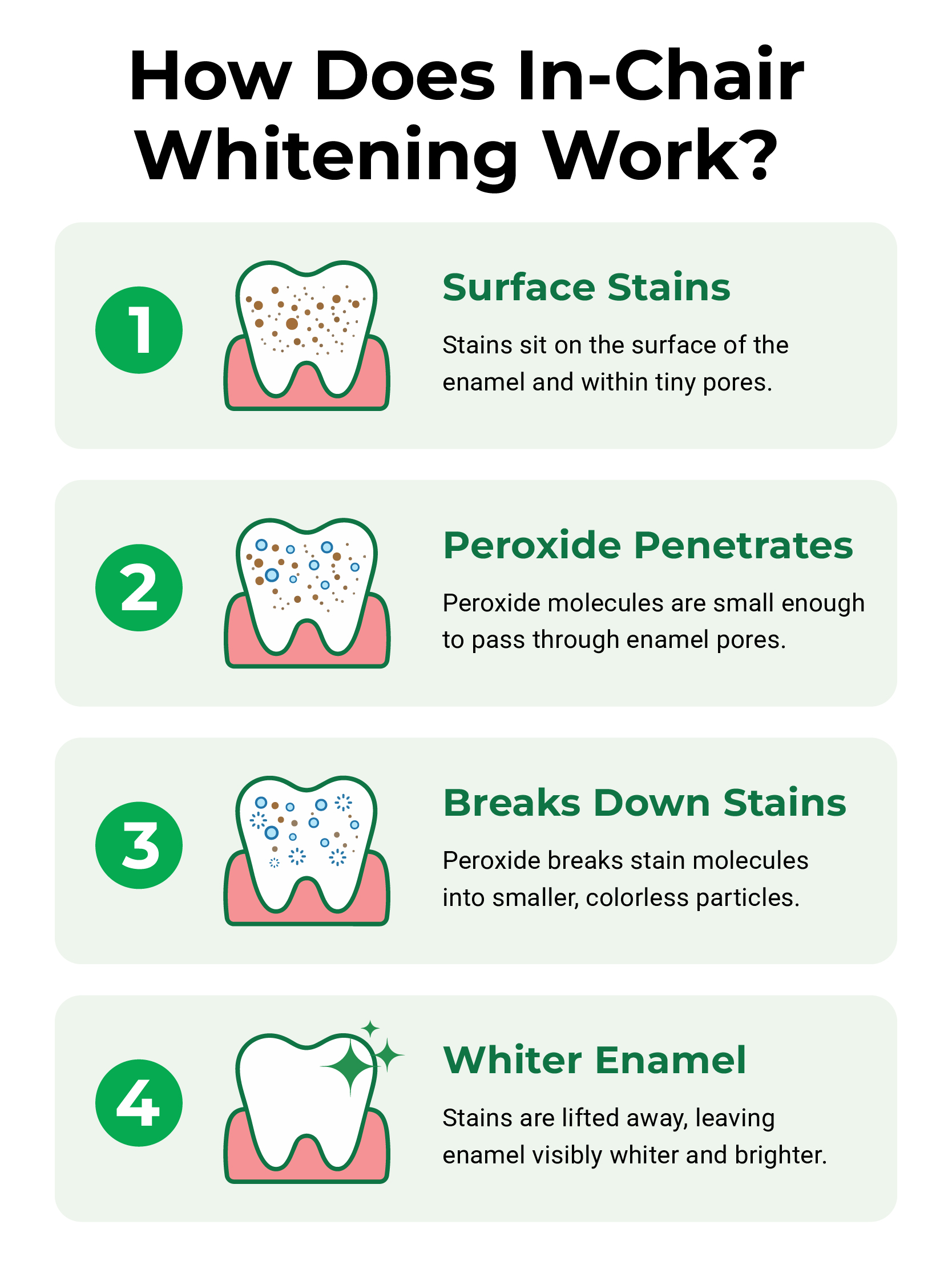
Professional in-chair whitening is often the most suitable option for patients who want rapid results and close clinical supervision.
2. Dentist-Prescribed Take-Home Whitening
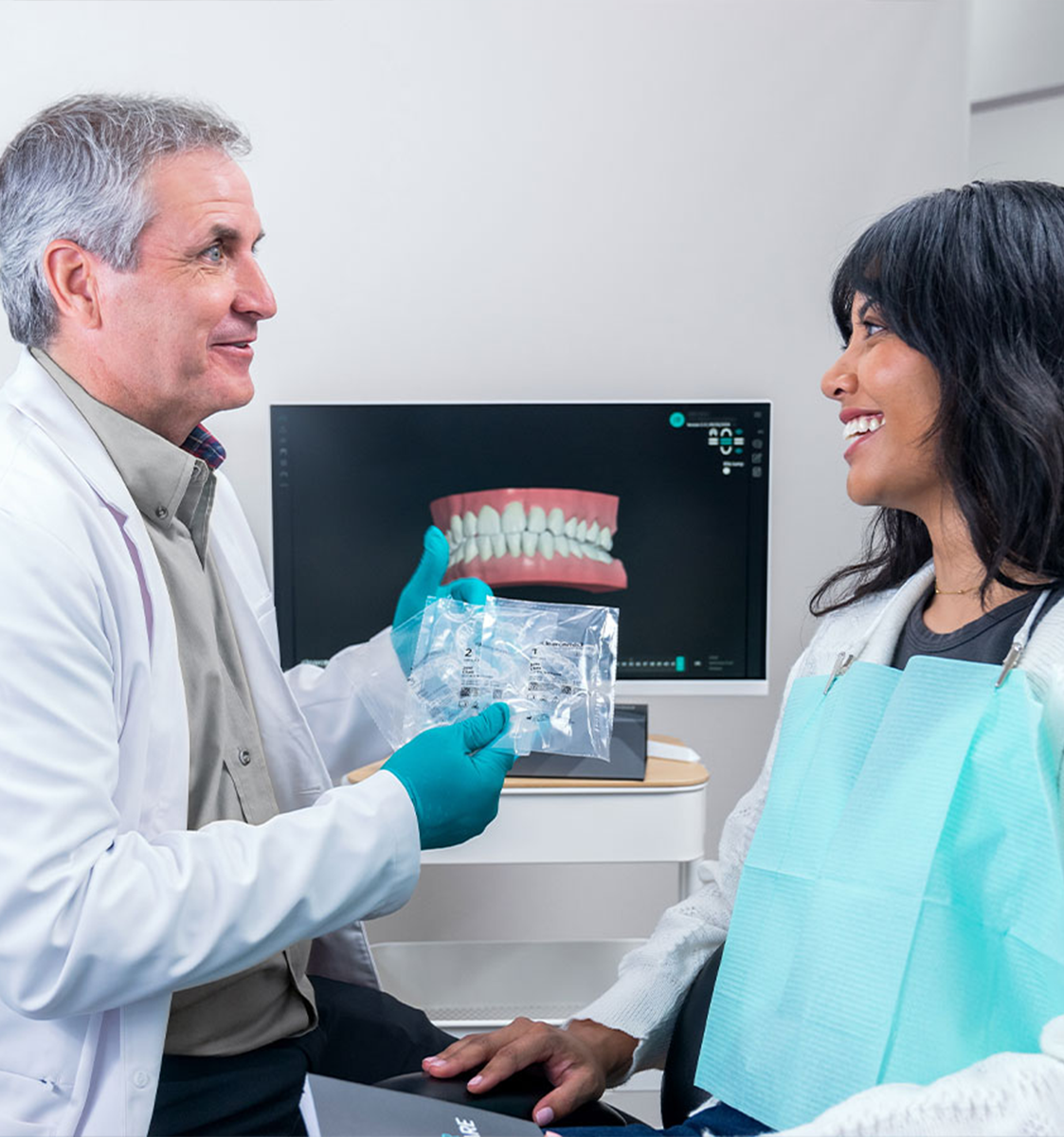
Take-home whitening is a professional alternative to in-chair treatment. After assessing your teeth, a dentist provides customised trays and whitening gel, along with instructions for safe use.
You wear the trays for a specified period over several days or weeks. Because the treatment is gradual, it allows you to control the process while achieving a significant improvement in tooth colour.
Pros
- Convenient: You can complete the treatment at home.
- Customised fit: Professionally made trays usually fit more accurately than generic trays.
- Gradual results: A slower process may make sensitivity easier to manage.
- Suitable for maintenance: Your dentist may provide guidance on future touch-up treatments.
- Professional support: A dentist can confirm whether whitening is appropriate and advise how to use the product safely.
Cons
- Slower results: Several applications may be needed to reach your preferred shade.
- Requires consistency: You must follow the recommended schedule and instructions.
- Possible sensitivity: Temporary sensitivity or gum irritation can still occur.
- Additional cost: Custom trays, whitening gel and the dental assessment increase the overall cost.
For many patients, dentist-supervised take-home whitening offers a practical balance between convenience, effectiveness, and control.
3. Over-the-Counter Whitening Products
Over-the-counter whitening products are available from pharmacies, supermarkets, and online retailers. They include strips, gels, pens, generic trays, and whitening toothpaste.
These products vary considerably in formulation and strength. Whitening toothpaste mainly removes surface stains through cleaning and polishing ingredients, while strips and gels may contain peroxide at concentrations intended for consumer use.
Pros
- Lower cost: They are usually cheaper than professional teeth whitening.
- Easy to access: Many products can be purchased without a dental appointment.
- Convenient: Treatment can be completed at home.
- Useful for maintenance: Some products may help maintain results after professional whitening.
Cons
- Less predictable results: Effectiveness depends on the product and the type of staining.
- More limited whitening: Results may be less noticeable than those achieved with professional treatment.
- Poorer fit: Generic trays may not fit the teeth and gums as accurately as customised trays.
- Potential sensitivity: Products can cause tooth sensitivity or gum irritation.
- No dental assessment: Cavities, gum disease or damaged teeth may go undetected.
Over-the-counter products may suit people with mild surface staining, but they are not appropriate for every patient.
4. Whitening Toothpaste
Whitening toothpaste is designed mainly to remove external stains caused by coffee, tea, red wine, smoking and certain foods. It generally does not change the internal colour of the tooth to the same extent as peroxide-based whitening.
Pros
- Affordable
- Easy to use
- Widely available
- Suitable for daily oral hygiene
- May help maintain a brighter appearance
Cons
- Produces limited whitening
- Does not usually create a dramatic shade change
- Some abrasive formulas may contribute to enamel or dentine wear if used excessively or incorrectly
Whitening toothpaste is best viewed as a stain-removal and maintenance product, not a replacement for professional teeth whitening.
5. Whitening Strips and Pens
Whitening strips are placed directly against the teeth, while whitening pens apply gel to the tooth surface. Both are designed for home use and are commonly marketed for minor staining.
Pros
- Convenient
- Relatively inexpensive
- Simple to use
- May improve mild surface staining
Cons
- Results may be uneven
- Coverage can be inconsistent
- Sensitivity and gum irritation are possible
- They may have little effect on deeper or intrinsic staining
Patients should follow the product instructions carefully and stop using the product if significant discomfort develops.
Who Can Perform Teeth Whitening in Australia?
Australian regulations are important when considering professional teeth whitening. A registered dental practitioner may provide whitening within their scope of practice, provided they have the appropriate education, training and competence. They must also comply with relevant Australian laws, professional standards and regulations.
The Dental Board of Australia states that dental practitioners should only perform procedures for which they are educated, trained and competent. Practitioners should assess a patient’s suitability, explain potential risks, and obtain informed consent.
Product concentration is also relevant. In Australia, only registered dental practitioners can use or supply teeth-whitening products containing more than 6% hydrogen peroxide or more than 18% carbamide peroxide.²
The rules may also vary according to the state or territory, product formulation, concentration, and how the product is supplied or used. The Therapeutic Goods Administration lists dental whitening products among excluded goods, but other professional, poisons, consumer and state or territory requirements may still apply.
For professional whitening, consulting a registered dentist is the safest way to receive an assessment and appropriate treatment advice.
Which Whitening Treatment Is Best?
The best option depends on your dental health, desired results, budget, and preferred treatment time.
- In-chair professional whitening suits patients seeking fast results.
- Dentist-supervised take-home whitening suits patients who prefer gradual treatment at home.
- Over-the-counter products may help with mild staining or maintenance.
- Whitening toothpaste is mainly useful for removing surface stains.
Before treatment, a dental professional should check your teeth and gums, identify any decay or gum disease, discuss sensitivity, and explain what results are realistic. Whitening is not permanent, and results can fade with age, smoking, diet, and lifestyle. Maintenance treatment may be needed.
Frequently Asked Questions
Is teeth whitening safe?
When used appropriately and according to professional instructions, teeth whitening is generally considered safe. Temporary sensitivity and gum irritation are the most common side effects. Professional assessment can help reduce avoidable risks.
How long do whitening results last?
Results vary between individuals. Oral hygiene, diet, smoking, ageing, and maintenance habits all affect how long whitening remains visible.
Can whitening damage teeth?
Incorrect use, excessive application, or prolonged exposure can increase the risk of sensitivity and soft-tissue irritation. Following product instructions and seeking professional advice can improve treatment safety.
Will whitening change the colour of crowns or veneers?
No. Whitening products lighten natural teeth but do not usually change the colour of crowns, veneers, fillings or bridges.
Should I see a dentist before whitening?
Yes. A dental examination can identify cavities, gum disease, cracked teeth, defective fillings and other conditions that may need treatment first.
Conclusion
Teeth whitening ranges from professional in-chair treatment and customised take-home whitening to over-the-counter products, strips, pens and toothpaste. Each option has different benefits, limitations, costs, and safety considerations.
Professional treatment generally provides more predictable results and includes a dental assessment, while consumer products may be more affordable and convenient but less effective. In Australia, treatment should also be considered in light of dental practitioner registration, professional competence, product concentration and applicable regulations.³
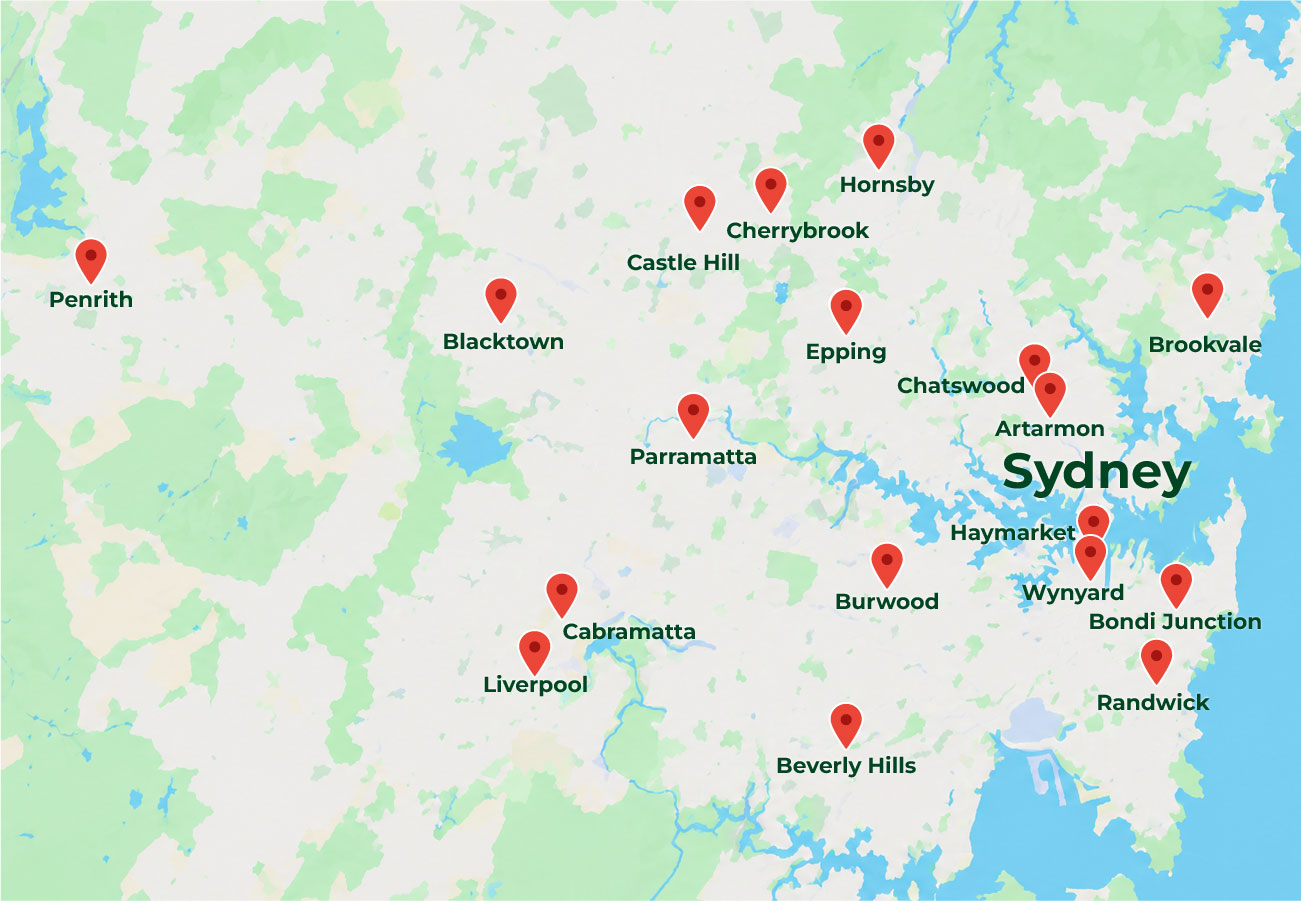
A consultation with a registered dentist is the best first step towards achieving a safe, natural-looking and suitable whitening result. Book now with No Gaps Dental at one of our 18 Sydney locations.
References
- Australian Dental Association. Teeth Whitening.
- Dental Board of Australia. Teeth whitening products.
- Australian Dental Association. Policy Statement 2.2.8 – Teeth Whitening (Bleaching) By Persons Other Than Dental Practitioners.
Important Information
All dental treatments have potential risks and limitations. A clinical assessment is required to determine which treatment is suitable for your individual circumstances.
Any surgical or invasive procedure carries risks. Before proceeding, you should seek a second opinion from an appropriately qualified health practitioner.
This article is written by Dr Ana Ramos of No Gaps Dental Brookvale clinic.