





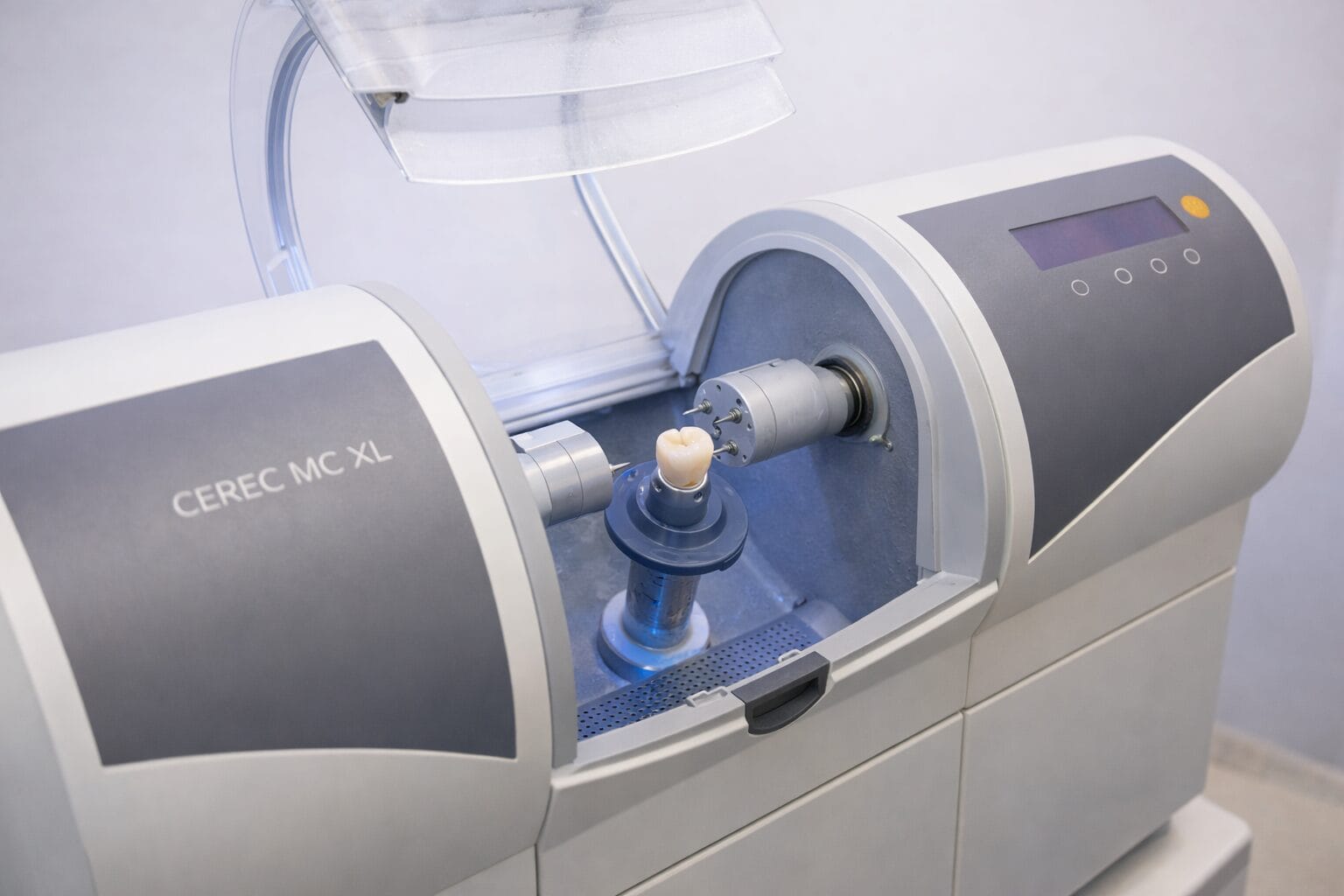
Most dental crowns typically require two appointments spaced about two weeks apart. However, with modern CEREC technology (featured photo) now available at select No Gaps Dental locations across Sydney, some patients may be eligible for a “same-day” crown in just one visit. This guide explains the clinical steps of the crown-on-tooth procedure and what you can expect as we work to restore the long-term health of your teeth.
Quick Summary for Patients
- Traditional Path: 2 visits, 2 weeks apart, includes a temporary crown.
- CEREC Path: 1 visit, about 2 hours, no temporary crown needed (select locations).
- Comfort: Performed under local anaesthesia; feels similar to a large filling.
- Outcome: Restores biting and chewing function and prevents further tooth fracture.
“When patients understand each step before we start, it often takes the mystery out of the process and helps them feel much more at ease throughout their treatment,” says Dr. May Aung from our Castle Hill and Cherrybrook clinics.
If you are new to this treatment, we recommend starting with our guide on what a dental crown is. To discuss your specific needs, book a consultation at any of our 18 Sydney locations.
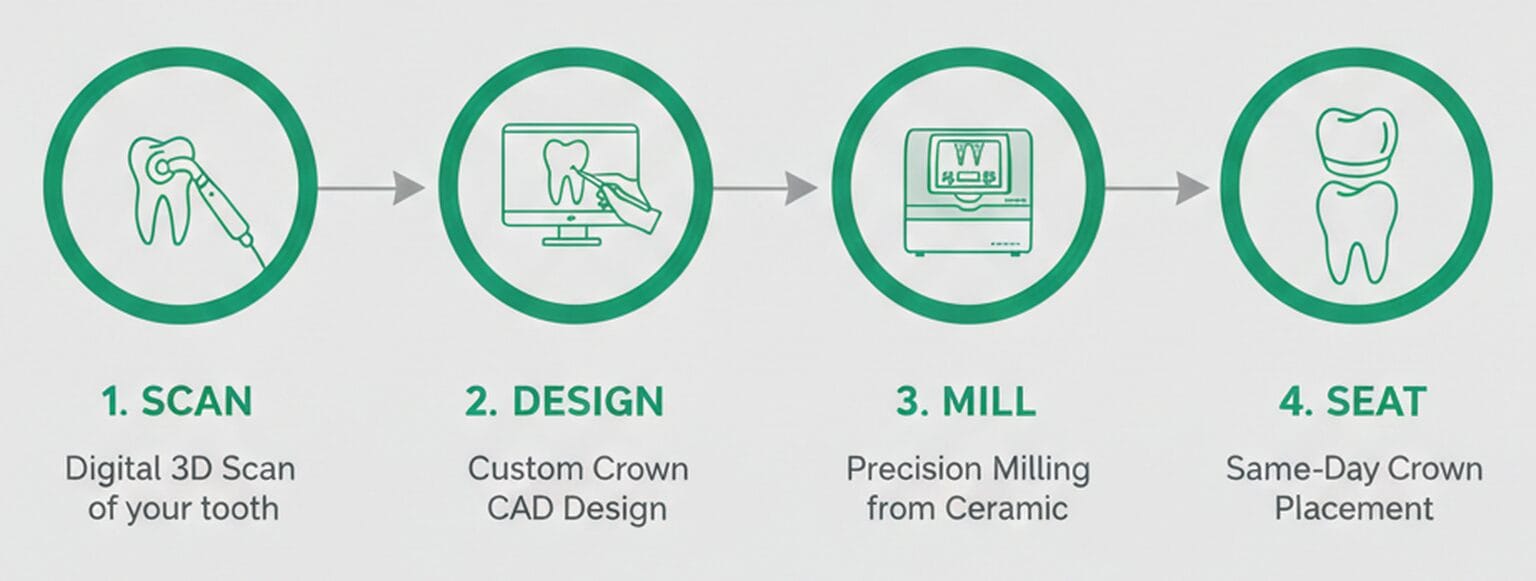
CEREC Dental Crown Procedure:
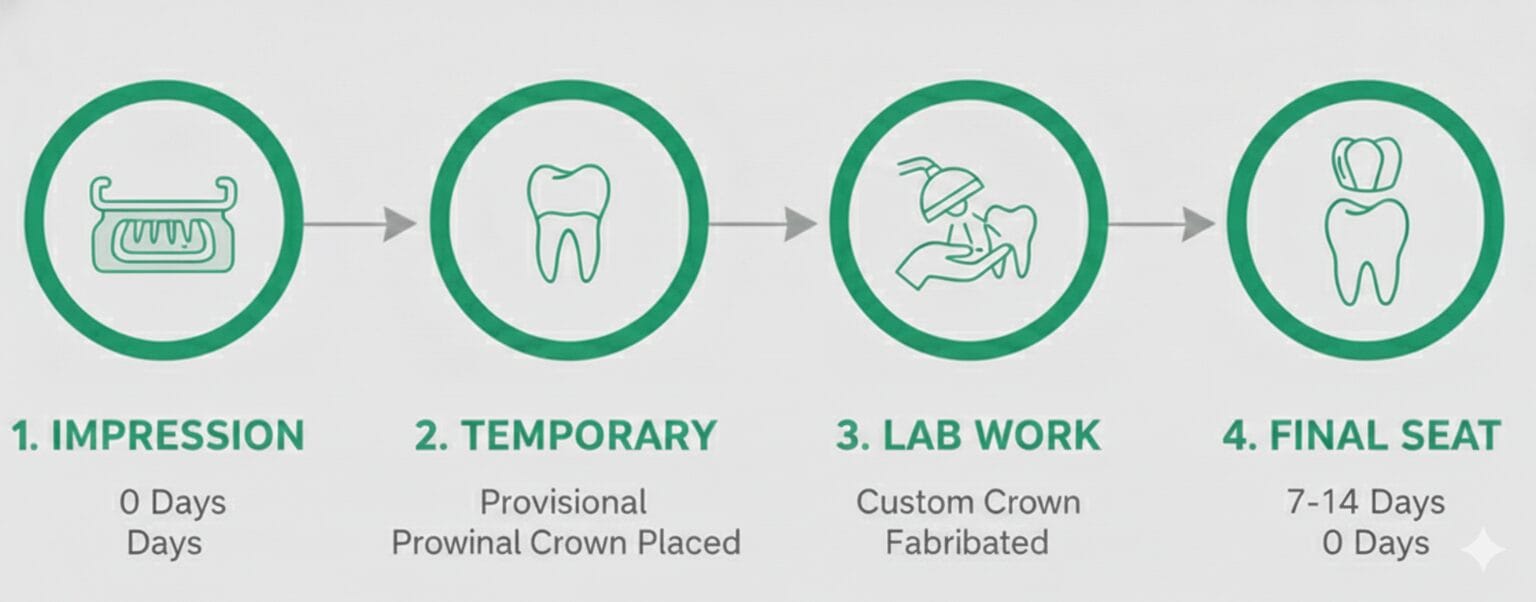
Traditional Dental Crown Procedure:
The Dental Crown Process – At a Glance
Depending on the material chosen and the technology used, your experience will follow one of two paths:
| Feature | Traditional Crowns | CEREC Same-Day Crowns |
|---|---|---|
| Appointments | 2 visits (1–2 weeks apart) | 1 visit |
| Temporary Crown | Required for protection | Not needed |
| Time in Chair | 60–90 mins (Visit 1) | Around 2 hours (Single visit) |
| Availability | All 18 No Gaps locations | Available at No Gaps Dental Beverly Hills, Blacktown, Bondi Junction, Brookvale, Castle Hill, Chatswood, Cherrybrook, Hornsby, Penrith, Parramatta, Randwick, Sydney CBD – Wynyard clinics |
Special note regarding CEREC dental crown treatment from Dr May Aung:
“The first session usually takes about an hour, and the second session takes around 30 minutes,” explains Dr. May Aung. “There is a break between while the crown is being designed and milled, so patients can step out for a coffee. They don’t need to stay in the dental chair the entire time. Many patients feel relieved when they learn they’re not keeping their mouth open for two hours straight.”
The Step-by-Step Dental Crown Procedure
At No Gaps Dental, our experienced clinical team uses modern equipment to ensure the process is as efficient and comfortable as possible. Each treatment is tailored to the health of your individual tooth.
1. The Initial Assessment & Diagnostic X-Rays
Before any work begins, your dentist will perform a thorough clinical assessment. This is where we determine if a crown is the best way to save the tooth before a break that reaches the root.
“We often take a digital X-ray to check the root of the tooth and the bone structure,” says Dr. May Aung. “If there is significant decay or risk of infection to the tooth’s pulp, we may need to discuss a root canal treatment before the crown is placed to ensure the foundation is healthy.”
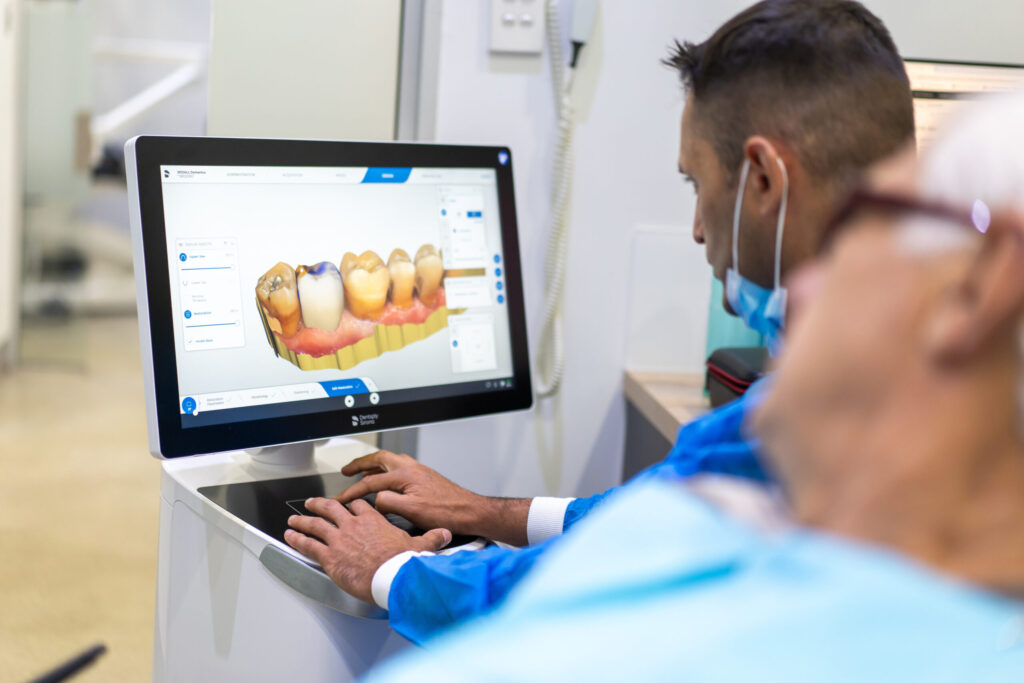
As part of the dental crown treatment, our dentist often take a X-ray to review your tooth and bone structure
2. Preparing and Shaping the Tooth
To ensure the crown fits perfectly and looks natural, the tooth must be “shaped.” Under local anaesthesia, your dentist will gently remove a small amount of the outer surface of the tooth (enamel). You may hear a humming sound and feel some vibration, but you should not feel any sharp sensations.
“The shaping process depends on the type of crown we are making,” says Dr. Aung. “Each crown material requires an optimal thickness to ensure strength and longevity. We carefully shape the tooth to provide enough space for the crown while preserving as much healthy tooth structure as possible.”
3. Taking the Impression: Putty vs. Digital
Once the tooth is prepared, we need an exact “map” of your mouth to ensure the new crown aligns perfectly with your bite.
Traditional Path: We use a putty-like material to take a physical mould. This is sent to a dental laboratory.
Digital Path (CEREC): We use a 3D intraoral scanner to take a digital “picture”—no messy putty or gag reflex concerns.
4. The Temporary Crown (Traditional Path Only)
If your crown is being made in a lab, it takes about two weeks to arrive. During this time, we will fit a temporary crown made of acrylic to protect your tooth and prevent sensitivity.
5. Final Fitting and Bonding
At your final appointment (or later the same day with CEREC), your dentist will “try on” the permanent crown. Once the fit, bite, and colour are confirmed, the crown is permanently bonded using a specialised dental adhesive.
Dental Crowns: The Complete Series
This article is part 3 of our 6-part series on dental crowns.
- What is a Dental Crown?
- Choosing Dental Crown Types and Materials
- The Dental Crown Procedure (You are here)
- Coming Soon: Dental Crown Cost in Australia
- Coming Soon: How Long Does a Dental Crown Last?
- Coming Soon: CEREC Crowns Pros and Cons
Frequently Asked Questions Regarding Dental Crown Procedure
How long does the CEREC appointment take?
At our select Sydney clinics, a same-day crown typically takes about 2 hours. This includes preparation, milling the crown on-site, and the final fitting.
Do health funds cover dental crowns?
Most private health insurance policies with “Major Dental” cover will contribute. We recommend bringing your membership card so we can check your eligibility via HICAPS on the spot.
Is CEREC available at every No Gaps clinic?
Traditional crowns are available at all 18 locations, but CEREC technology is at select clinics. Call us on (02) 8007 6727 to find your nearest location or book online.
Important Information
All dental procedures carry risks. A clinical assessment is required to determine whether a dental crown is suitable for your individual circumstances. Before proceeding, you should seek a second opinion from an appropriately qualified health practitioner.
We spoke to Dr May Aung from No Gaps Dental Cherrybrook and Castle Hill clinics.