






Why healthy gum matters – periodontal disease
When most people think about dental health, they think about teeth first. White teeth, straight teeth, strong teeth. But in my day-to-day work as a dentist in Sydney, I often remind patients that gum health is just as important.
Gum disease is very common in Australia. According to the Australian Dental Association (ADA), about 1 in 3 Australians aged 15 and over have moderate to severe gum disease. The ADA often reminds people that healthy gums are the foundation of a healthy mouth, but they are often overlooked.
Research studies and data from the Australian Institute of Health and Welfare (AIHW) support these findings, showing that around 30% of Australians have moderate to severe gum disease. The data also shows that about 14.5% of Australians have severe gum disease, which is the most serious form of the condition1.
Like I often remind my patients, healthy teeth need healthy foundations. Gum care is not just about cleaning. It is about protecting the structures that help keep your teeth stable for life.
Your gums help hold your teeth in place, protect the roots, and act as an important barrier against bacteria. When the gums become inflamed or infected, it can affect more than just how your smile looks. It can affect how your teeth feel, how stable they are, and how easy it is to keep your mouth healthy over time.
At my No Gaps Dental clinics in Sydney – whether it is Brookvale, Bondi and Randwick, I often see patients who did not know they had gum issues because they were not experiencing pain. That is one of the reasons regular dental check up and clean are so useful. They give us a chance to check your gums properly, explain what is happening, and help you manage small concerns before they become more difficult to treat.
What is gum disease?
Periodontal disease, often called gum disease, is a condition that affects the gums and the supporting structures around the teeth. In simple terms, it happens when bacteria build up around the gumline and cause inflammation.
Stages of gum disease
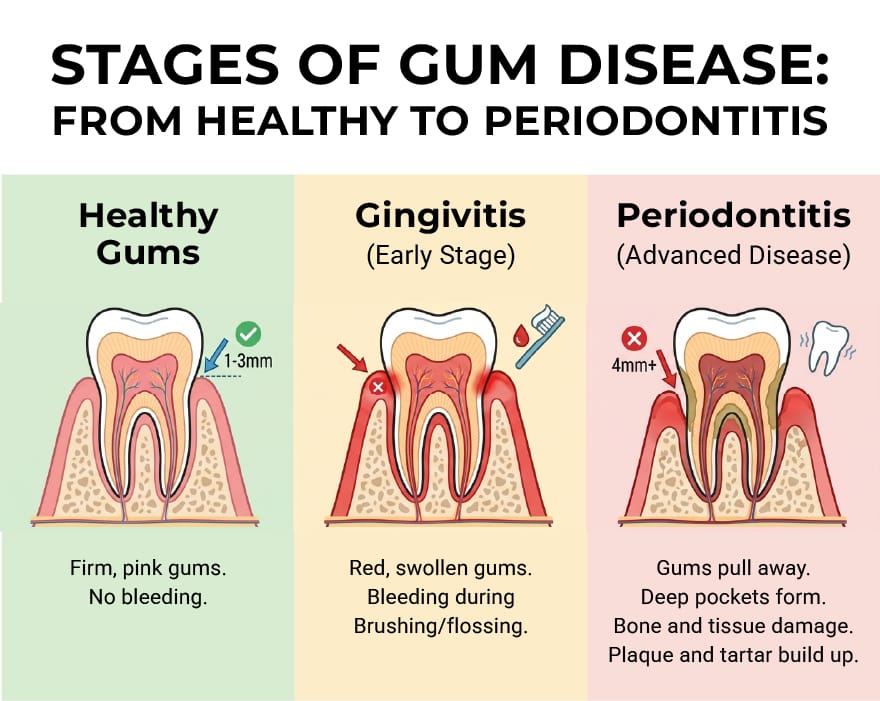
The early stage is often called gingivitis2. This is when the gums may look red, feel swollen, or bleed when brushing or flossing. At this stage, the condition can often be improved with professional cleaning and better daily home care.
If gum inflammation is not managed, it can progress to periodontitis. This is a more advanced form of gum disease where the bone and tissues supporting the teeth may be damaged. Over time, this can lead to deeper spaces around the teeth, gum recession, loose teeth, and in severe cases, tooth loss.
One of the difficult things about periodontal disease is that it can develop slowly. Some people do not feel pain in the early stages, so they may not realise there is a problem until the gums have already changed.
What are the symptoms of gum disease?
Gum disease can look and feel different from person to person. Some common signs include3:
- Bleeding gums when brushing or flossing
- Red, swollen, or tender gums
- Bad breath or a bad taste that keeps coming back
- Gums that appear to be shrinking or pulling away from the teeth
- Teeth that feel loose or have changed position
- Sensitivity near the gumline
- Discomfort when chewing
It is worth noting that not everyone has obvious symptoms. Some patients feel completely fine but still have gum pockets or early bone changes that can only be detected during a dental check-up.
“A lot of patients are surprised when I say bleeding gums are not normal. Even if it only happens sometimes, it is worth checking because it may be the first sign that the gums need attention.”
Why gum health is important
Gum health is important because it can affect the long-term stability of your teeth. Teeth do not sit in isolation. They are supported by bone, ligaments, and gum tissue. If those supporting structures become inflamed or damaged, the teeth can become less stable over time.
It is also important because gum health is part of your overall health picture. For some patients, gum disease may be more complex if they have certain medical conditions, take particular medications, smoke, or find daily cleaning difficult. This is why regular dental check-ups matter. They allow your dentist to monitor changes before they become harder to manage.
Can gum disease affect general health?
Gum disease, especially periodontitis, is more than a local infection. Chronic gum inflammation has been associated with general health conditions including diabetes and cardiovascular disease, and remains an active area of research4. Looking after your gums supports your oral health and may support your general health too.
The relationship with diabetes is considered bidirectional: people with diabetes are more susceptible to periodontal disease, while severe gum inflammation may make blood glucose harder to control. Periodontitis has also been linked with cardiovascular disease, with proposed mechanisms including systemic inflammation, bacterial spread, and effects on blood vessel health.
Emerging research has also explored links between periodontal disease and Alzheimer’s disease or cognitive decline. While this evidence does not prove that gum disease directly causes dementia, chronic inflammation and oral bacteria are being investigated as possible contributing factors. Maintaining healthy gums may therefore support not only oral health, but broader general health as part of a preventive healthcare approach.
What happens during a gum check?
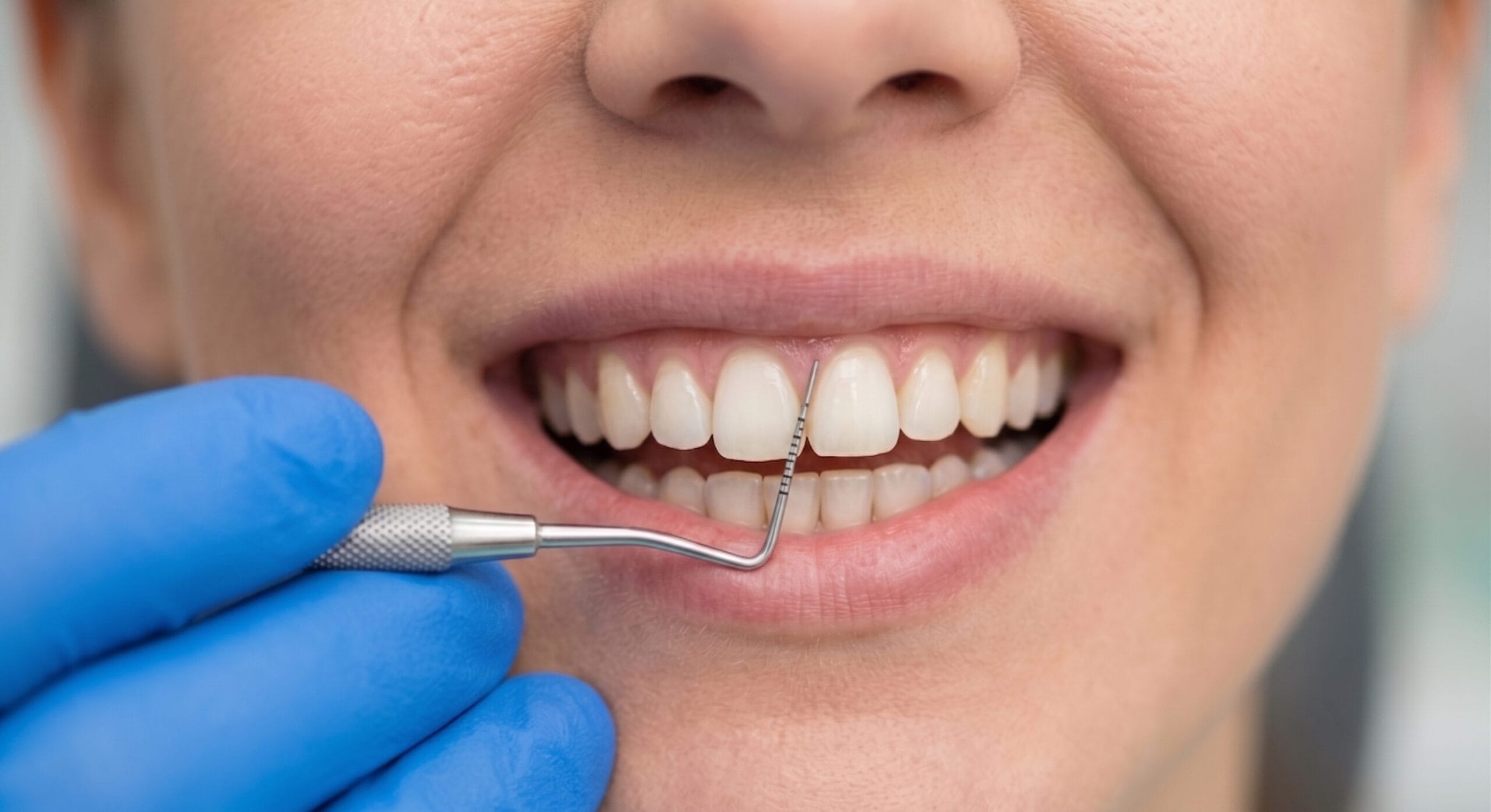
A gum check is a routine part of a dental appointment. Your dentist may use a small, blunt measuring instrument called a periodontal probe to gently check the spaces between your teeth and gums. These measurements help show whether the gums are healthy or whether there are deeper pockets where bacteria may collect.
If deeper pockets are found, your dentist may recommend periodontal charting. This is a more detailed record of gum measurements around the teeth. Dental x-rays may also be recommended to assess the bone levels supporting the teeth.
This process helps your dentist understand whether gum disease is present, how advanced it may be, and what treatment or ongoing care may be appropriate.
How is gum disease treated?
Treatment depends on the stage and severity of the condition. For early gum inflammation, professional cleaning and improved home care may be enough to help the gums settle.
For more advanced periodontal disease, treatment may involve deeper cleaning below the gumline5. This is sometimes called deep cleaning, root surface cleaning, or root planning. The aim is to remove plaque, tartar, and bacteria from the areas around the teeth and roots so the gums have a healthier environment.
In some cases, local anaesthetic may be used to keep the area comfortable during treatment. After treatment, it is normal for some patients to experience temporary tenderness, bleeding, or sensitivity. Your dentist will explain what to expect and how to care for your mouth afterwards.
For more complex cases, referral to a periodontist, which is a dentist with specialist training in gum disease, may be recommended.
“My approach is to explain what we can see, what it means, and what the next sensible step is. Patients should feel informed, not overwhelmed.”

Looking after your gums at home
Daily home care plays a major role in managing gum health. Professional treatment can remove build-up and help stabilise the gums, but long-term improvement depends on what happens every day at home.
A good routine usually includes brushing twice a day with a soft toothbrush and cleaning between the teeth with floss or interdental brushes. Interdental brushes can be especially helpful where there are larger spaces between the teeth or where gum pockets have been present.
Your dentist or oral health professional can show you the right technique for your mouth. This matters because the best tool is the one you can use properly and consistently.
It is also important to attend regular review appointments if you have had periodontal disease. Some patients may need reviews every three to six months, depending on their gum health, risk factors, and treatment history.

Why regular visits matter
Gum disease is often easier to manage when it is detected early. Regular check-ups allow your dentist to compare your gum measurements over time, identify any changes, and recommend care before the problem becomes more advanced.
For busy families it can be easy to delay a dental visit until something hurts. I understand that life gets busy. Between work, school, sport, and family commitments, dental care can fall down the list.
But gum disease is one of those conditions where waiting for pain is not always the safest guide. By the time symptoms become obvious, the gums and bone may already need more involved care.
As someone who has spent many years caring for the local community, and as a sports coach who understands the value of regular training and prevention, I often think about gum health in the same way. Small, consistent habits make a big difference over time.

When should you book a gum check?
You should consider booking a dental appointment if your gums bleed, feel swollen, look red, or if you have persistent bad breath, loose teeth, or gum recession. You should also book if it has been a while since your last check-up and you are unsure how your gums are tracking.
At No Gaps Dental Brookvale/Bondi Junction/Randwick, we focus on helping patients understand their oral health clearly, without judgement. If gum disease is present, the first step is to assess it properly, explain the findings, and discuss the care options that may suit your needs.
Healthy gums help support healthy teeth. If you are unsure about your gum health, a check-up is a simple and sensible place to start.
Book an appointment with No Gaps Dental Brookvale or call our team at (02) 8007 6706 to ask about your next dental check-up.
Seja bem vindo a nossa clínica de Brookvale. (Welcome to our Brookvale clinic.)
Sources:
- Australian Institute of Health and Welfare – Oral health and dental care in Australia: Healthy mouths
- Better Health Channel – Gum disease
- Healthdirect Australia – Gum disease
- American Academy of Periodontogy – Gum disease and other diseases
- Australian Dental Association – Gum disease treatment
Important Information
All dental procedures carry risks. A clinical assessment is required to determine whether a periodontal treatment is suitable for your individual circumstances. Any surgical or invasive procedure carries risks. Before proceeding, you should seek a second opinion from an appropriately qualified health practitioner.
This article is written by Dr Thiago De Araujo of No Gaps Dental Brookvale, Bondi Junction, and Randwick clinics.